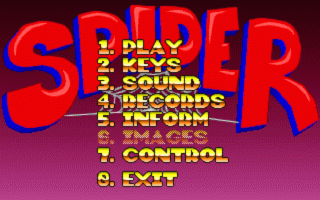
Spider is an arcade-style game developed by the Spanish company Buena Vision in 1993. The game draws inspiration from titles such as Qix by Taito (1981) and Gals Panic by Kaneko (1990). Players control a spider-like cursor tasked with unveiling hidden images by covering portions of the screen through strategic line-drawing. The gameplay combines traditional arcade mechanics with adult-themed content in certain versions of the game, offering a varied experience depending on the edition.
The DOS version of Spider brought the arcade experience to home computers, maintaining the core mechanics that made the game popular in arcades. It featured support for keyboard and mouse inputs, catering to PC users. Two distinct versions of the game were released: one featuring automotive-themed images and another with tasteful nude photographs, consisting of artistic and decent depictions of the female form. These versions were marketed separately, ensuring the game could appeal to different player preferences. The game was available in both Spanish and English, allowing it to reach players in multiple language markets.
Spider was distributed as shareware, with a limited version made freely available to players. The shareware version did not include sound and was controlled exclusively with the keyboard, providing a basic introduction to the game’s mechanics. The full registered version, however, supported sound as well as additional input methods, including mouse and joystick, offering a more complete and immersive experience. Players who registered the game received a 3.5-inch diskette containing the full version, additional levels, and varied images, including cars and depictions of Asian, American, and Latin women. Registration also included digital documentation and promotional materials for other Buena Vision products. The registration process was available globally, with payment methods tailored to different regions.
The game offered various power-ups to enhance gameplay, such as increased speed, additional lives, and time extensions. Players navigated through multiple levels, each containing three zones and a bonus stage designed to boost the final score. Enemy types ranged from bombs to invincible death enemies, each introducing unique challenges that required strategic thinking to overcome. The objective in each level was to cover a specified percentage of the screen while avoiding enemies and their attacks.
Spider stands as a compelling example of mid-90s arcade and DOS gaming, blending traditional mechanics with thematic versatility. The DOS version played a significant role in expanding the game’s reach, ensuring its accessibility to players who preferred home computing over arcade systems. Its unique gameplay and cultural context ensure that Spider remains a notable entry in the history of video games, remembered for both its technical execution and its ability to cater to diverse audiences.