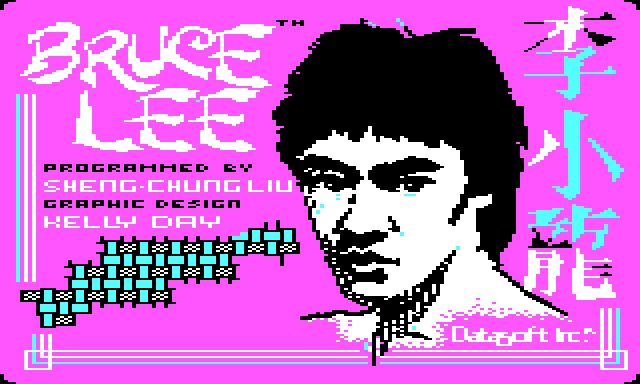
Bruce Lee is a platform and fighting game designed by Ron J. Fortier, with graphics by Kelly Day, and published by Datasoft. It was originally released for Atari 8-bit computers and the Commodore 64 in 1984 before being converted to several other systems, including the IBM PC. Although the Commodore 64 edition became the best-known version, the DOS conversion preserves the same unusual mixture of platform navigation, simple combat and puzzle-like obstacles.
The player controls martial-arts star Bruce Lee as he explores an underground fortress in search of a wizard guarding immense wealth. The game consists of approximately twenty interconnected single-screen chambers filled with ladders, platforms, electrical charges, moving walls and other hazards. Progress usually requires collecting lanterns placed around each room; gathering the necessary lanterns opens previously inaccessible passages and allows Bruce to move deeper into the fortress.
Bruce can run, jump, duck, punch and perform a flying kick. He is continually pursued by two opponents: a black-clad ninja and the large green warrior Yamo. Both enemies return after being defeated, so combat is generally a temporary solution rather than the main objective. They are also vulnerable to the fortress’s traps, allowing an observant player to lure them into electrical fields, mines and other dangers. This interaction between combat, platforming and environmental hazards gives the game greater variety than most early platform titles.
The multiplayer options are among the game’s most distinctive features. Two players can take turns controlling Bruce, but the second participant may instead control Yamo directly and attempt to stop the first player. If Yamo is left inactive, the computer resumes control of him. This competitive arrangement turns the relatively predictable adventure into a more chaotic contest and contributed considerably to the game’s lasting appeal, particularly on the Commodore 64.
The DOS version is limited by its stark four-colour CGA graphics and elementary sound, making it less visually attractive than the colourful Commodore 64 edition. Nevertheless, its clear screen design and straightforward controls allow the original gameplay to survive the conversion largely intact. Bruce Lee is comparatively short once its rooms and traps have been memorised, but its fast pace, memorable enemies and inventive multiplayer mode made it one of Datasoft’s most successful action games and a widely remembered classic of the Commodore 64 era.