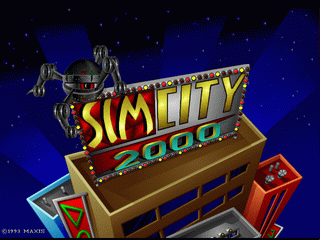
SimCity 2000 (SC2K) is a city-building simulation developed by Maxis and the second main game in the SimCity series. It first appeared on the Macintosh in 1993, followed by the DOS release in 1994. The DOS edition uses mouse-driven menus and building tools. Other adaptations followed for platforms including Amiga, Windows and OS/2. In 1995, the game received the Origins Award for Best Military or Strategy Computer Game of 1994.
Building on the original SimCity, the sequel replaces the overhead view with a dimetric perspective that shows both the roofs and sides of buildings. The landscape has different elevations, and underground views reveal water pipes and subway lines. As mayor, the player designates residential, commercial and industrial zones, provides infrastructure and services, and manages the finances that keep the city running. Buildings appear as zones develop; construction sites indicate new growth, while darkened, abandoned properties reveal areas in decline.
The range of facilities expands to include prisons, schools, libraries, museums, marinas and hospitals, as well as futuristic arcologies: enormous structures combining several urban functions. Transport options include roads, highways, bus depots, railway tracks, train depots and subways. Airports and seaports are created by zoning suitable land rather than placing a single finished building. Connections to neighboring cities support trade and development, making the transport network important both inside the city and beyond its borders.
Electricity can come from nine types of power plant: coal, oil, natural gas, nuclear, wind, hydroelectric, solar, fusion and satellite microwave. Their availability depends on the simulated year, so advanced technologies appear as time passes. Hydroelectric plants require waterfall tiles, and most other plants have a limited lifespan and eventually need replacing. Alongside electricity, the city gains a water system with pumps, underground pipes, water towers, treatment facilities and desalination plants. Expanding these networks supports denser development.
Financial management is more detailed than in the first game. Residential, commercial and industrial tax rates can be adjusted separately, while service funding and infrastructure maintenance compete for the available budget. City ordinances provide another way to influence urban life, but policies and facilities may impose additional costs. Growth therefore requires balancing development with the expense of keeping existing neighborhoods supplied and functioning, rather than simply covering every empty area with new zones. The query tool supplies information about individual map tiles, including building names and types, elevation and land value. Roads reveal traffic levels, while power plants report how much of their capacity is being used, helping the player locate overloaded infrastructure. In the computer version, querying a library and choosing 'Ruminate' also opens an essay by Neil Gaiman.
SimCity 2000 marks an important step in the history of city-building games: it expanded the original SimCity concept into a more detailed urban simulation, bringing together varied terrain, underground infrastructure, a wider range of public services and more elaborate financial management. Its distinctive dimetric cityscape made these interacting systems visible within a single evolving metropolis. The game illustrates how building a city can combine creative freedom with the challenge of managing its long-term development, making it a significant chapter in both the SimCity series and the city-building genre.