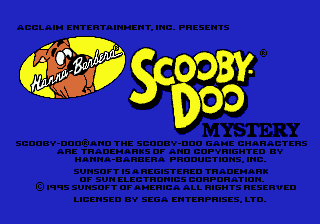
Scooby-Doo Mystery is a graphic adventure developed by The Illusions Gaming Company and released by Acclaim Entertainment in North America in 1995. Based on the animated series, it follows Shaggy Rogers and Scooby-Doo as they investigate apparently supernatural events. A separate Scooby-Doo Mystery for the SNES appeared in the same year, but its platforming and clue-collecting design differs substantially from this Genesis game.
The Genesis version uses a point-and-click-style interface operated with the controller. Shaggy is the main controllable character, with Scooby following him through the scenes. Ten commands at the bottom of the screen provide ways to interact with the surroundings. The player switches between these actions and the inventory, selecting objects and finding appropriate situations in which to use them.
Progress depends on solving puzzles rather than completing a sequence of platform challenges. Exploring locations, examining objects and discovering their uses gradually opens the way onward. Fred, Daphne and Velma appear in supporting roles, especially around the beginning and conclusion of each case. Shaggy and Scooby carry out most of the investigation, keeping their partnership at the center of the game.
The first of the two scenarios, Blake’s Hotel, takes the group to a hotel belonging to Daphne’s uncle Blake. A figure resembling the ghost of a Native American chief has frightened away guests and most of the employees. Only the cook and gardener remain. When Shaggy and Scooby enter the building, they discover that Blake has been kidnapped, turning the visit into a search for the missing owner.
The hotel investigation eventually leads to a gold mine beneath the building and an ancient medallion sought by the supposed ghost. The mystery therefore connects events in the hotel with hidden locations below it. The player must work through the obstacles separating these areas and discover how the objects and people encountered relate to the haunting, before the culprit can be caught.
The second scenario, Ha-Ha Carnival, takes place in a closed amusement park. A hostile clown has sabotaged the attractions and imprisoned the manager. Shaggy and Scooby must help him and rescue their companions stranded in a lake while investigating the park. The case eventually reveals the clown’s grievance over being refused employment, supplying a human motive behind the threatening disguise.
The two cases follow the television series’ pattern of suspicious events, investigation and the exposure of an apparently supernatural opponent. The Genesis game expresses that structure through commands, inventory puzzles and connected scenes. Its distinction from the SNES release is therefore fundamental: although both use the same characters and title, this version centers on working out what to do with the clues and objects encountered during an adventure.