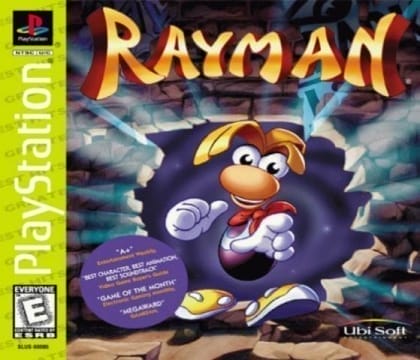
Rayman is a side-scrolling platformer developed by Ubisoft Montpellier and published by Ubisoft. Originally released for the Atari Jaguar in 1995 before being ported to PlayStation, it introduced players to the limbless hero Rayman and the whimsical yet dangerous world of the Glade of Dreams. The game follows Rayman as he sets out to rescue his friend Betilla the Fairy and restore order to the land after the evil Mr. Dark steals the Great Protoon, the source of harmony in the world. Renowned for its stunning hand-drawn animation, surreal art style and punishing difficulty, Rayman became a landmark title for PlayStation and launched one of the most enduring franchises in video games.
Rayman was the creation of French artist Michel Ancel, who began developing the concept as a teenager before joining Ubisoft. The game's development spanned several years and went through significant changes, starting from an original vision of an ambitious RPG before evolving into a pure platformer. The PlayStation version, released in late 1995, benefited from the console's CD-ROM format, allowing full Red Book audio, a vibrant color palette and extensive animation that set a new standard for 2D platformers in the 32-bit era. The game's distinctive art style, characterized by surreal landscapes, strange enemies and the iconic hero himself, established a unique visual identity that set Rayman apart from its contemporaries.
The gameplay is built around Rayman's unique abilities. Unlike traditional platforming heroes, Rayman has no limbs - instead, he attacks with his telescoping fists, which can also be used to grab rings and swing across gaps. As the game progresses, Rayman gains new powers, including the ability to hang from ledges, a helicopter hair glide and the power to run up walls. These abilities are woven into increasingly complex level designs that demand precise timing, mastery of the controls and memorization of enemy patterns. The game features six distinct worlds - the Dream Forest, Band Land, the Blue Mountains, Picture City, the Caves of Skops and Mr. Dark's Challenge - each with its own unique visual theme, soundtrack and set of challenges.
Rayman is notorious for its high level of difficulty. The game demands pixel-perfect platforming, punishing players with instant death for the slightest mistake. The later worlds, particularly Picture City and the Caves of Skops, feature some of the most challenging sequences in the history of 2D platformers, including the infamous music-themed level "Allegro Presto" that requires split-second timing. The game saves progress only after completing each world, meaning players must master entire stages without continues, a design choice that contributed to its reputation as one of the hardest games on PlayStation.
On release, Rayman received widespread critical praise for its visual art, imaginative world design and precise controls. It sold more than 3 million copies across all platforms and became a flagship title for Ubisoft. Rayman's success established the character as the company's mascot and led to numerous sequels, spin-offs and adaptations across various media. While later entries in the series would embrace 3D gameplay and eventually return to 2D with the acclaimed Rayman Origins and Legends, the original Rayman remains a beloved classic, remembered for its unmatched art direction and uncompromising challenge that defined a generation of platformer enthusiasts.
Controls
- ←→: Move Left / Right
- ↑: Enter Door / Climb (contextual)
- ↓: Crouch
- X: Jump
- Square: Punch / Grab Ring
- Triangle: Use Power (after acquiring)
- Circle: Charge Punch / Cancel
- L1/R1: Cycle Options (menu)
- Start: Pause