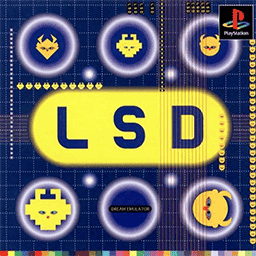
LSD: Dream Emulator is an exploration game developed and published by Asmik Ace Entertainment for PlayStation. Conceived by the Japanese multimedia artist Osamu Sato, the game rejects traditional video game objectives to simulate the experience of dreaming. Players wander through surreal first-person environments, with the only actions being moving and touching objects, which 'links' them to new dreamscapes. The game is based on a decade-long dream diary written by Hiroko Nishikawa, a designer at Asmik Ace.
Osamu Sato imagined LSD not as a game but as a piece of interactive art that used the PlayStation as its medium. Inspired by his frustration with traditional skill-based racing games, he imagined a space where unskilled players could simply enjoy exploration. The title 'LSD' was chosen to appeal to psychedelic subcultures, and the acronym also receives multiple interpretations within the game, such as 'in Life, the Sensuous Dream', to reflect the chaos of dreams.
Gameplay consists of ten-minute 'dreams' in which players explore static environments such as a Japanese village or a city, but with textures and inhabitants that become increasingly random and surreal over time. Interactions trigger the 'link' to other areas. After each dream, a graph classifies the experience as an 'Upper', 'Downer', 'Static' or 'Dynamic' dream. A mysterious 'Grey Man' may appear; touching him erases the player's ability to use the 'Flashback' feature to revisit the previous dream.
Despite a limited release only in Japan and initial obscurity, LSD: Dream Emulator gained an enormous cult following in the West years later through internet humor blogs and YouTube Let's Plays. It has been praised by publications such as Hardcore Gaming 101 and Kill Screen as one of the most unsettling and effective dream simulations ever created. Its influence has extended to music, with the band Alt-J using its art for their album 'Relaxer' with Sato's permission, and a thriving community of fans creating unofficial remakes and translations.
Controls
- ←→↑↓: Move / Turn
- L1/R1: Look behind
- L2/R2: Strafe
- X: Run
- ☐/△/○: Interact / Link